A few weeks ago, I spent six days camping and volunteering in Acadia National Park in Maine. I went as part of the National Collegiate Honors Council’s Partners in the Parks trip. The timing of this trip was great—we came before peak season (which runs from Memorial Day to Labor Day) and the weather was pleasant but cool enough to allow working.
Monday was spent picking up gear, setting up camp, and getting to know each other. On Tuesday morning, we watched the sunrise from Cadillac Mountain, the highest point on the Eastern Seaboard. After that, we made our way to the Hulls Cove Visitor Center where we met the rangers who would lead our crew. We spent the morning and afternoon doing maintenance on the carriage roads, clearing drainage ditches and weeding around the coping stones. This is affectionately referred to as “flossing” Rockefeller Jr’s teeth.
While we did this, we also learned a bit about Acadia’s history. It is the only national park in New England, and it’s mostly donated private land from wealthy families who “summered” in Maine. The donation of the land wasn’t just from the goodness of their hearts; Schoodic Peninsula was donated by the Moore family (1929) in part because keeping up with the taxes was a financial drain. John D. Rockefeller Jr, who financed much of the construction and infrastructure in Acadia National Park, did so as part of a PR campaign after being indirectly responsible for an attack on striking Colorado mine workers.
On Wednesday, we explored the nearby town of Bar Harbor. We took a boat tour and saw Acadia’s shore, nearby lighthouses, and lots of seabirds! I was able to recognize double crested cormorants, terns, and some species of gull. I added some New England birds to my life list: the common eider, razorbill, guillemot.
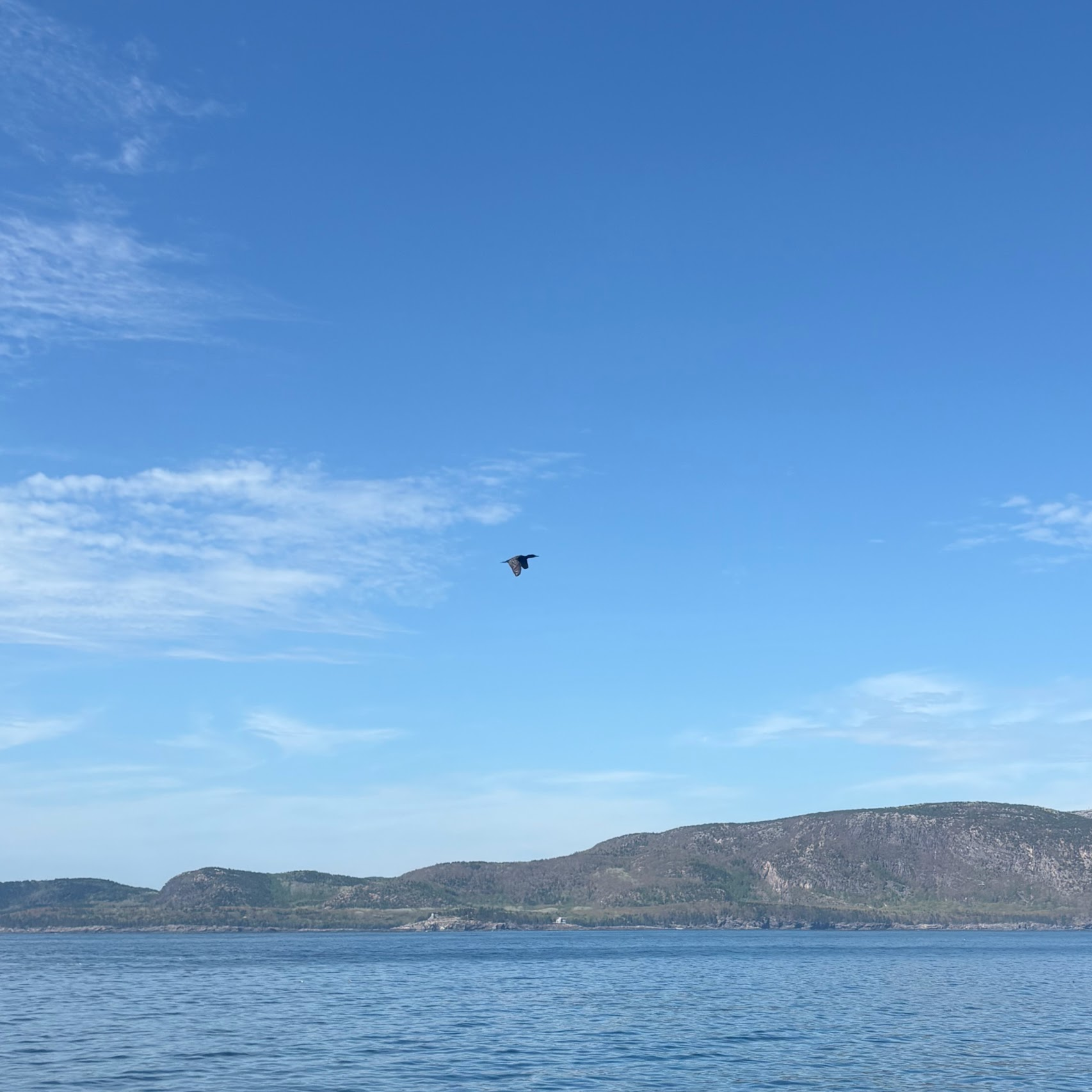 picture: a double crested cormorant flying over the ocean
After that, we drove to Schoodic Peninsula, the “quieter” side of Acadia and only really accessible by car. We had a good discussion in the evening about accessibility in the park, and one person made a really insightful comment: “the park is accessible to people who can’t hike, but not to those who can.” Acadia is a very “front-country” park (as opposed to the backcountry) – we had cell service for 90% of our visit. All the beautiful views didn’t feel “earned,” and I would say we spent an average of 2 hours in a car each day, not exactly the outdoors experience you would expect from “camping in a National Park.”
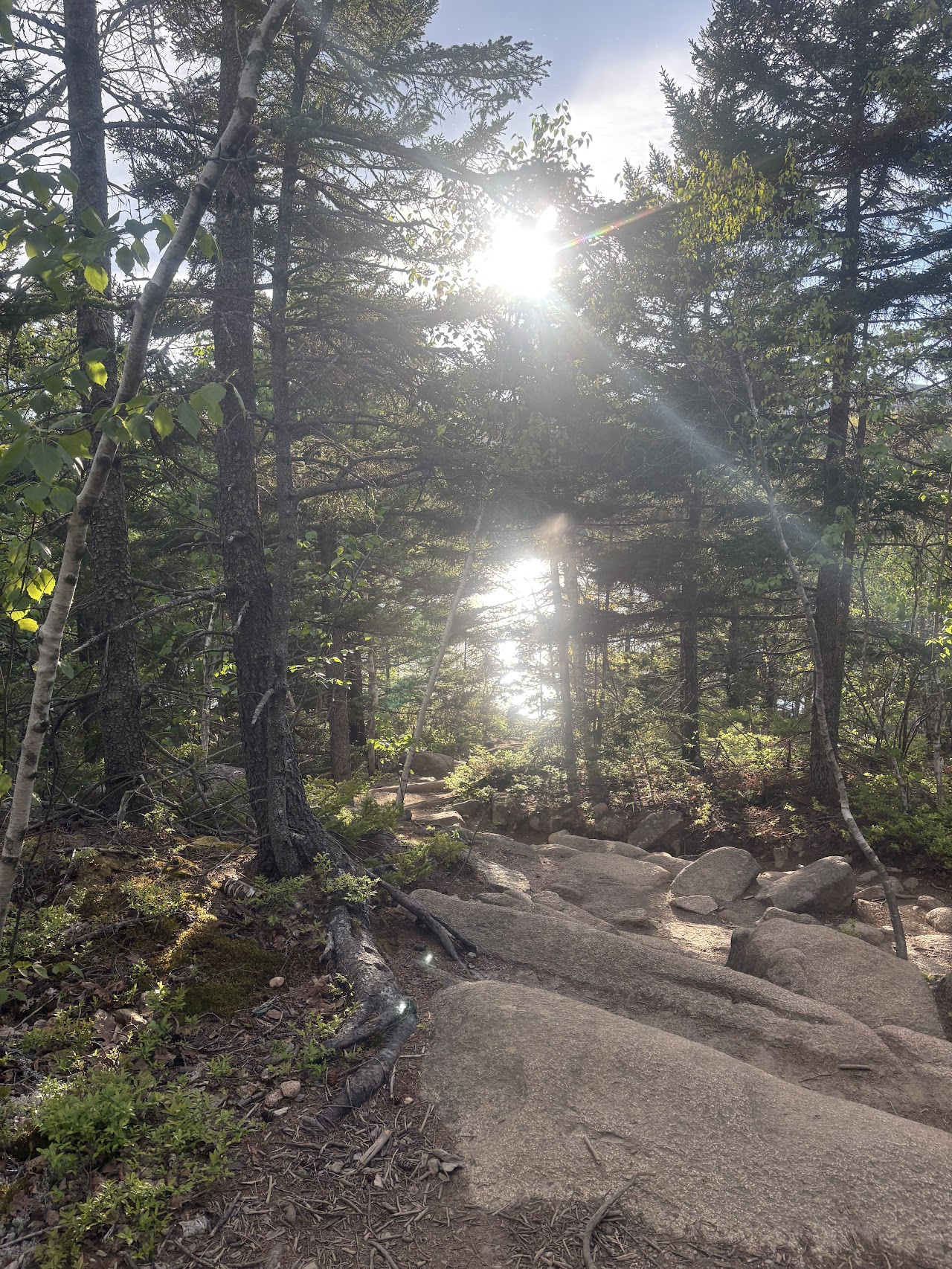
On Thursday, we were back to trail work, this time on trails going up Dorr Mountain. The drainage ditches we tackled on the lower portion of the trail hadn’t been touched in about 16 months, so the leaves were packed pretty tightly. Saying that raking was an arm workout is a bit of an understatement. We hiked a bit up and started “brushing” the trail. Trail brushing involves clearing dead branches and vegetation growing into the trail corridor to maintain safety and preserve the surrounding area. The hike and work was intense and we had to break for lunch before summiting. Regardless, this is one of my favorite photos from the entire trip. You can see the tools we used—a handsaw in my back hand and loppers in the front. My paracord bracelets definitely came in handy to keep them easily accessible.
We then hiked the Beehive, a 1.3 mile trail with a 450 foot cliff section. Hands down, it was one of my favorite trails ever, due to the rock scrambling and literal ladders we climbed.
 picture: view of The Bowl (lake) coming down from the Beehive trail
On Friday morning, we did a Soil to Summit hike. Scientists at the Schoodic Institute are running restoration projects on the peaks of Penobscot and Sargent Mountain in an attempt to bring back native species. Since vehicle access only goes halfway up the mountain, volunteers carry 5 to 25 pounds of soil up to the summit. I carried 15lb of soil up 1.3 miles and approximately 860 feet to the summit of Sargent Mountain.
Friday afternoon, we moved our camp to Camden Hills State Park and spent our last night together roasting marshmallows and singing cliché campfire songs.
On Saturday, we visited Mt. Battle Tower and then drove back down Route 1 (decidedly less scenic than California’s Highway 1) to Portland, ME. From there, I took the bus back to Boston, where I will spend the rest of June taking Microbiology and spending time with my family.
I really enjoyed the trip, and it was a great first time camping. My favorite part was watching the beautiful sunrises over the Atlantic—I absolutely love being a morning person. I was able to watch 3 sunrises across the 5 mornings I was there, a definite win (the other two days it was 40°F and I could not get out of my sleeping bag). While I haven’t kept to the 4am wake-up, I’m enjoying getting up at 6:30 and starting my day early.
~ Nalini
Gallery
Blackwoods Campground Sunrise
Top of Dorr Mountain
Picture: View from Beehive Trail
Picture: Bass Harbor Head Light Station
Picture: Sunset, Blackwoods Campground Ocean View Trail
Picture: Camden Hills State Park